Most people still think starting an ecommerce business means:
“Pick products → build a website → run ads.”
That might have worked years ago.
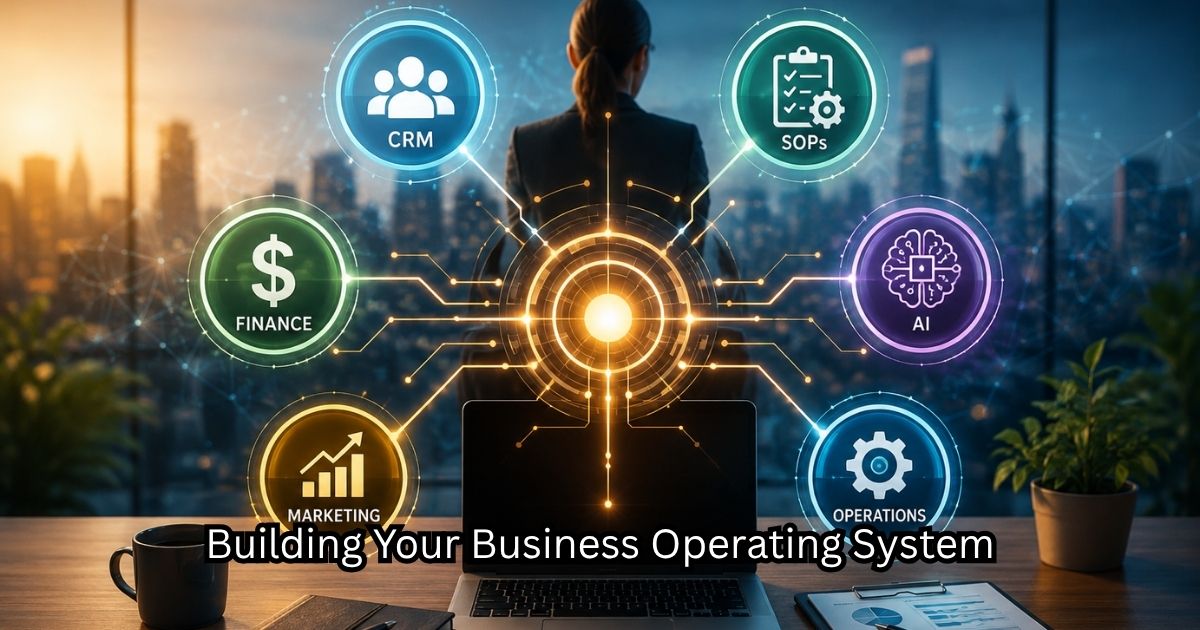
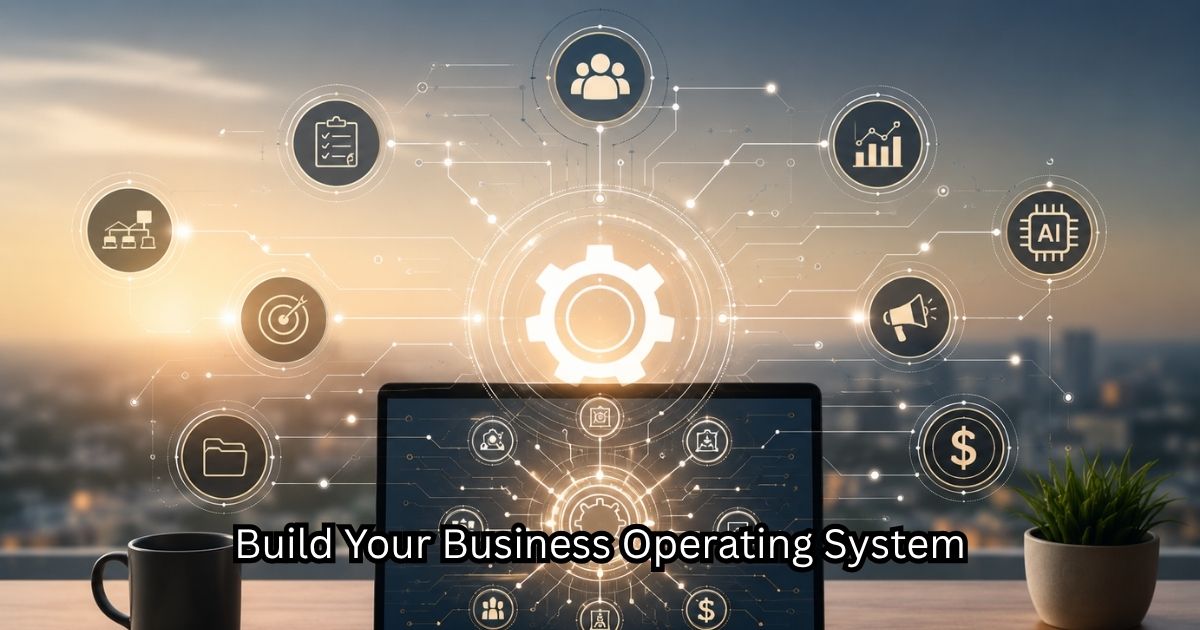
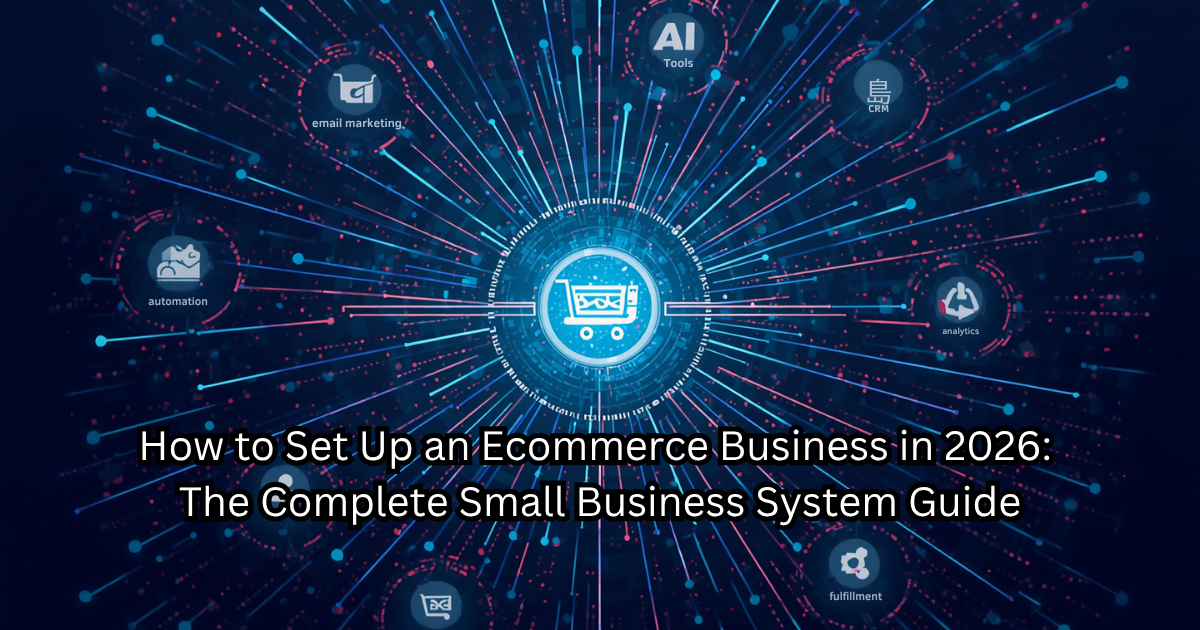
In 2026, the businesses growing steadily are being built differently. They are being built as systems.
Many new entrepreneurs spend months choosing logos, themes, colors, and products, only to discover later that they never designed the infrastructure underneath:
- No lead capture system
- No CRM
- No customer journey
- No content strategy
- No automation
- No operational workflow
The result?
A business that constantly depends on the owner being present.
At GMBS, we look at ecommerce differently.
You are not building an online store.
You are building a small business ecosystem.
The Modern Ecommerce Ecosystem
Think of your ecommerce business as five connected layers:
Layer 1: Foundation
- Business registration
- Domain name
- Website platform
- Payment processing
- Policies and legal pages
Layer 2: Customer Acquisition
- SEO content
- Social media
- Email capture
- Ads
- Partnerships
Layer 3: Relationship System
- CRM
- Email workflows
- Customer segmentation
Layer 4: Operations
- Order processing
- Inventory
- Customer support
- Shipping systems
Layer 5: Intelligence
- Analytics
- Customer behavior tracking
- AI-assisted insights
Without these layers working together, growth becomes messy.
Step 1: Choose the Right Ecommerce Platform
Many business owners ask:
“Should I use Shopify or WordPress?”
There isn’t one universal answer.
Shopify works well when you want:
✓ Faster setup
✓ Simpler maintenance
✓ Integrated payments
✓ Less technical work
WordPress + WooCommerce works well when you want:
✓ Full ownership
✓ Heavy SEO focus
✓ Content-driven growth
✓ Customization flexibility
For many small businesses in 2026:
Simple product store → Shopify
Content + affiliate + ecommerce ecosystem → WordPress/WooCommerce
Step 2: Build Your Customer Database Before Traffic Arrives
Many entrepreneurs focus only on visitors.
The real asset is customer data.
Your website should capture:
- Email address
- Name
- Interest category
- Product interest
- Source of traffic
- Purchase stage
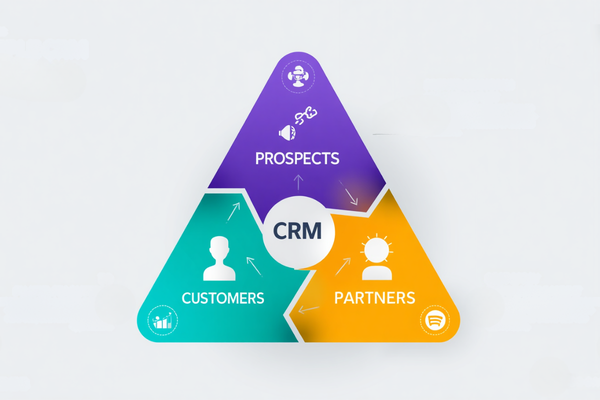
A simple CRM structure:
Prospects
- New leads
- Email subscribers
- Free resource downloads
Customers
- First purchase
- Repeat customers
- VIP customers
Partners
- Affiliates
- Vendors
- Collaborators
The goal is not simply collecting traffic.
The goal is building relationships
Step 3: Create Content Before You Run Ads

One common mistake:
People spend money on ads before creating useful content.
In 2026, content works as a long-term asset.
Examples:
Gift store
- Best gifts for remote workers
- Holiday gift ideas
- Corporate gifting guides
Wellness store
- Morning routines
- Healthy aging
- Product education
Home business
- Setup guides
- Tutorials
- Buyer comparisons
Each article becomes:
1 blog post → YouTube video → Reel → LinkedIn post → Email
This is one of the biggest leverage points for small businesses.
Step 4: Build Automation Early
Automation is no longer something businesses add later.
It should be designed from the beginning.
Examples:
Visitor downloads guide →
↓
Added to CRM
↓
Email sequence starts
↓
Lead segmented
↓
Follow-up reminder created
↓
Sales notification generated
↓
Performance tracked
Step 5: Add AI Where It Saves Time

AI should remove repetitive work—not replace business thinking.
Helpful uses:
Content
- Draft blogs
- Product descriptions
- Email ideas
Customer service
- FAQs
- Chat support
Operations
- Summaries
- Reports
- Workflow creation
Marketing
- Ad variations
- SEO ideas
- Social captions
AI becomes useful when connected to systems.
Suggested 2026 Small Business Stack
Website
- Shopify or WordPress/WooCommerce
CRM
- HubSpot or Airtable
- Mailchimp or ConvertKit
Automation
- Zapier or Make
Content
- ChatGPT + Canva
Analytics
- GA4 + Search Console
Scheduling
- Buffer
The Bigger Shift Happening
Years ago, online businesses competed mostly on products.
Today they increasingly compete on systems.
Two businesses may sell the same product.
One owner manually responds to emails, creates content randomly, and tracks everything in spreadsheets.
The other has:
- automated workflows
- content systems
- CRM pipelines
- analytics dashboards
The products are identical.
The systems are not.
Over time, systems usually win.
Final Thoughts
Starting an ecommerce business in 2026 is easier than it has ever been.
Running one successfully still requires structure.
Build the ecosystem first.
Then let products, content, and marketing flow through it.
Because the goal is not to create another online store.
The goal is to create a business that continues working even when you are not.