Most small business owners do not actually have a business system.
They have:
- scattered apps,
- random notes,
- text messages,
- disconnected spreadsheets,
- forgotten follow-ups,
- and constant mental overload.
That may work temporarily.
But eventually, lack of systems creates stress, inconsistency, missed opportunities, and burnout.
The businesses that scale sustainably usually develop something more important than motivation:
An operating system.
Not a complicated corporate structure.
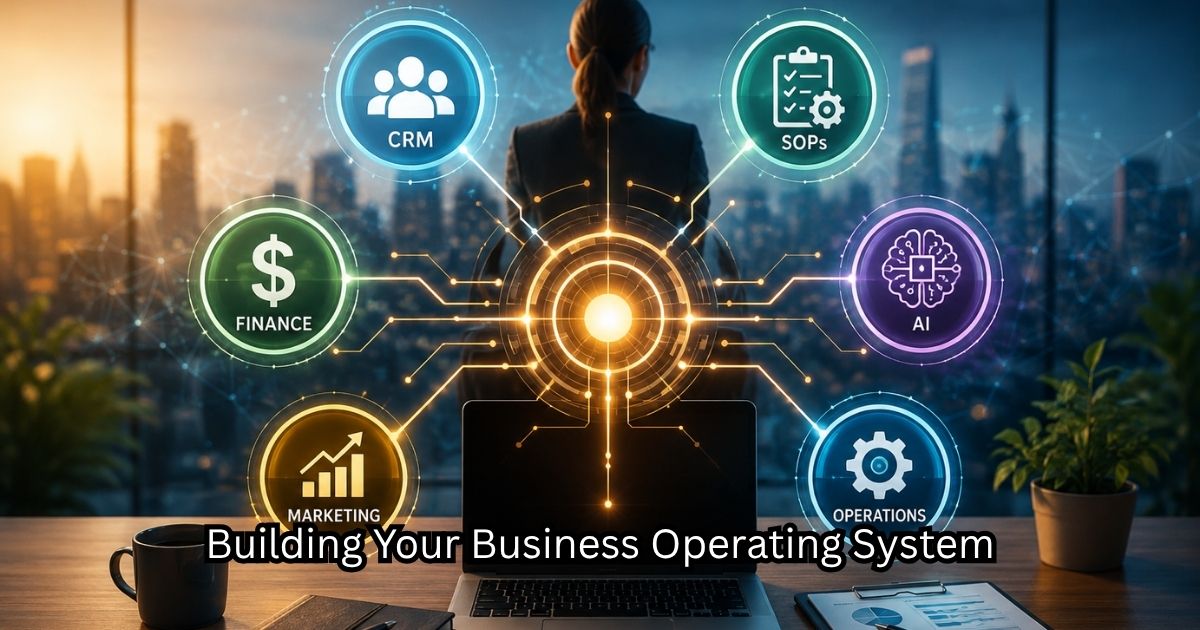
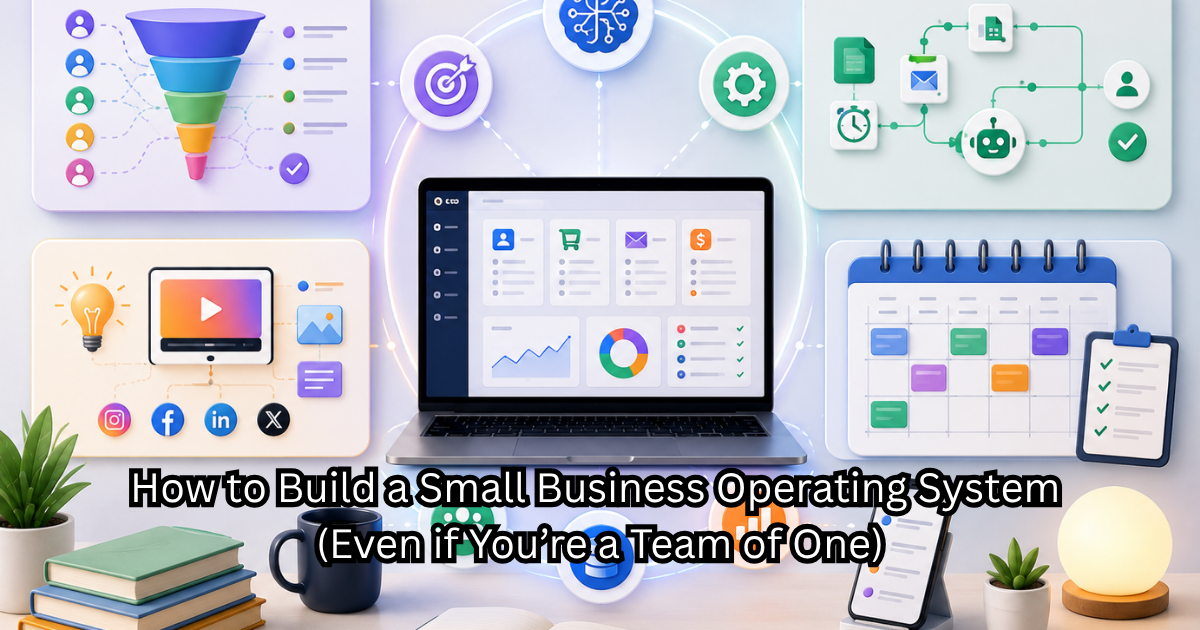
Just a connected workflow that keeps the business organized and moving.
Step 1: Create a Central Hub
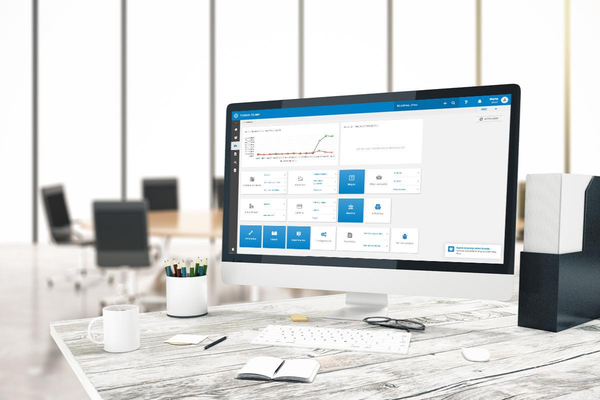
Every business needs one “source of truth.”
Many businesses use:
- Notion
- ClickUp
- Trello
This central workspace should contain:
- Projects
- Content plans
- SOPs
- Lead tracking
- Tasks
- Ideas
- Client notes
Step 2: Organize Your Customer Journey

Many small businesses lose leads simply because there is no follow-up structure.
A simple CRM system can organize:
- Leads
- Prospects
- Clients
- Follow-ups
- Sales stages
Tools like HubSpot or Zoho help create visibility.
Step 3: Automate Repetitive Tasks

Automation is one of the biggest advantages available to modern businesses.
Examples:
- Form submission → email response
- Booking → calendar invite
- Purchase → customer onboarding email
- New lead → CRM entry
Tools like Zapier help connect systems together.
Step 4: Build a Content Engine

Content is no longer optional.
But content creation becomes easier when systems are in place.
A simple structure:
- Blog post
- LinkedIn post
- Instagram carousel
- Reel/video
- Email newsletter
One idea becomes multiple assets.
Step 5: Create Weekly Operational Rhythms

Instead of reacting constantly, businesses benefit from recurring review systems.
Example:
- Monday → planning
- Tuesday → content
- Wednesday → outreach
- Thursday → optimization
- Friday → analytics & finance
Simple rhythms reduce mental chaos.
Final Thoughts
Small businesses often believe they need more people.
Sometimes what they really need is:
- clearer workflows,
- centralized systems,
- automation,
- and operational clarity.
The future may belong to businesses that are not just creative — but operationally intelligent.