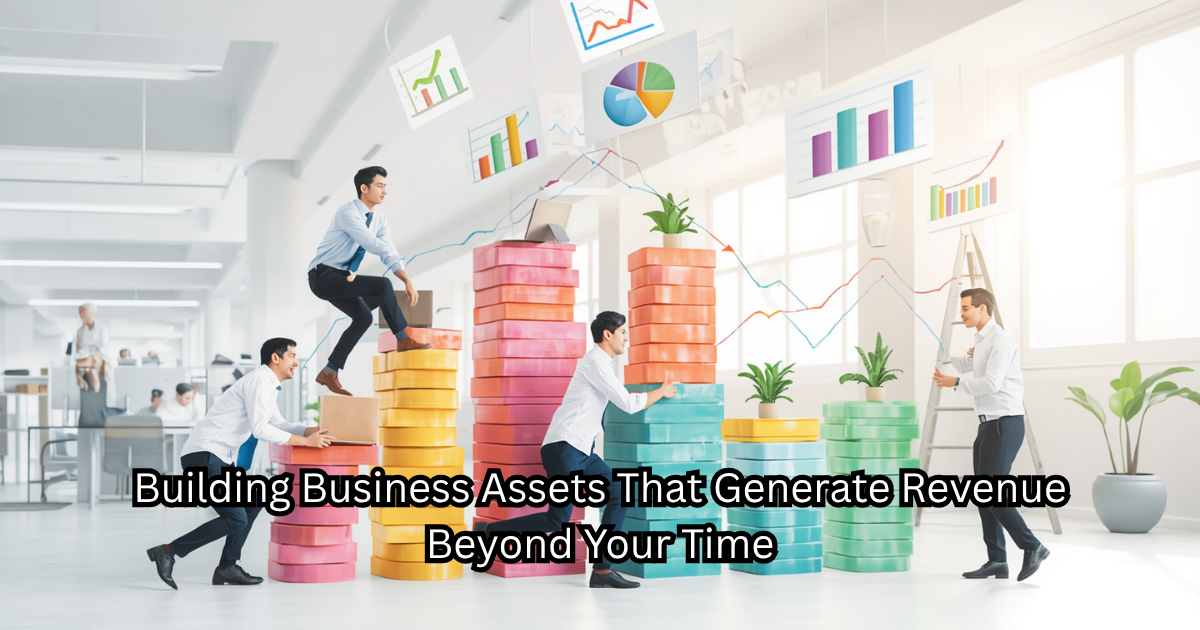
GMBS Playbook Chapter 1- Building Business Assets That Generate Revenue Beyond Your Time
Many entrepreneurs start a business seeking freedom.
Yet years later they find themselves trapped inside the very business they built.
The business depends on them.
They make the sales.
They solve the problems.
They approve the work.
They answer the questions.
And when they stop working, revenue slows down.
This is one of the biggest challenges facing small and mid-sized businesses today.
The solution is not necessarily hiring more people.
The solution is building assets.
What Is a Business Asset?
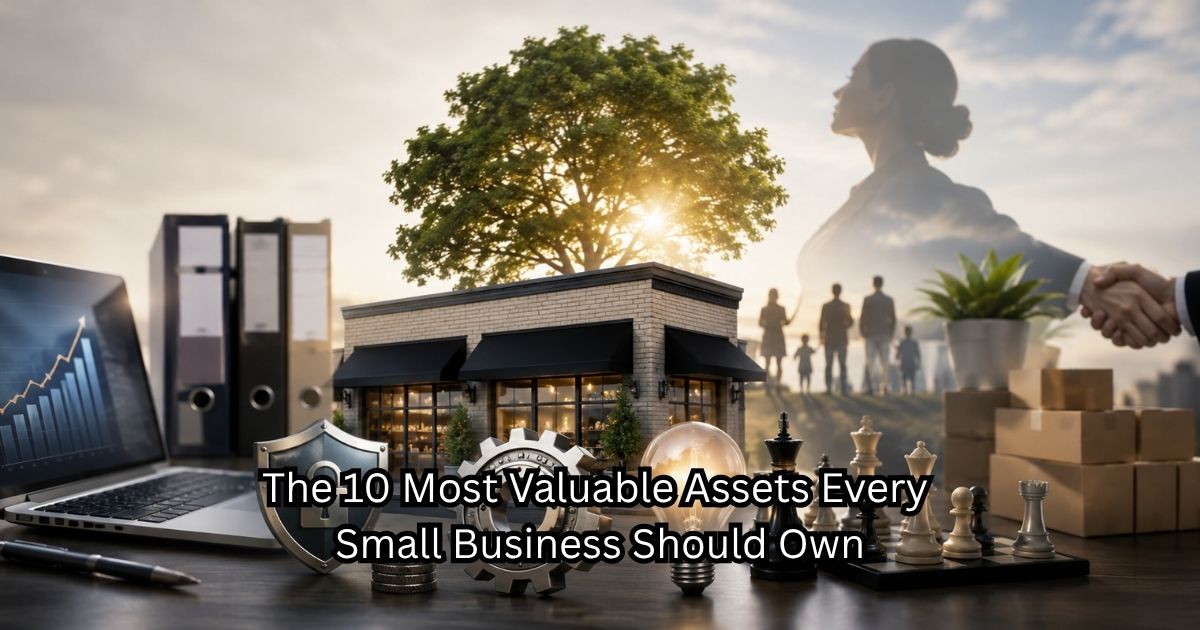
Most people think of assets as:
- Buildings
- Equipment
- Inventory
- Cash
Those are important.
But some of the most valuable assets in modern business are intangible.
Examples include:
- Systems
- Processes
- Intellectual property
- Brands
- Databases
- Content libraries
- Software
- Training programs
- Customer communities
Unlike labor, these assets can continue creating value long after they are built.
The wealthiest companies in the world increasingly generate revenue from intellectual assets rather than physical products.
The same principle can apply to small businesses.
The Four Levels of Business Revenue
Level 1: Selling Time

Examples:
- Consultants
- Designers
- Coaches
- Freelancers
- Agencies
Revenue depends entirely on personal effort.
If you stop working, income stops.
Level 2: Selling Products

Examples:
- Ecommerce stores
- Manufacturers
- Retailers
Revenue becomes less dependent on your time but still relies on production and fulfillment.
Level 3: Selling Systems
Examples:
- Franchises
- Membership programs
- Training platforms
- Subscription services
Revenue comes from a repeatable process.
The system becomes the product.
Level 4: Selling Intellectual Property

Examples:
- Licensing
- Software platforms
- Digital products
- Methodologies
- Educational curriculum
- Patents
- Proprietary frameworks
At this stage, the intellectual asset itself creates revenue.
This is where scalability accelerates.
Business Assets Every Company Should Build
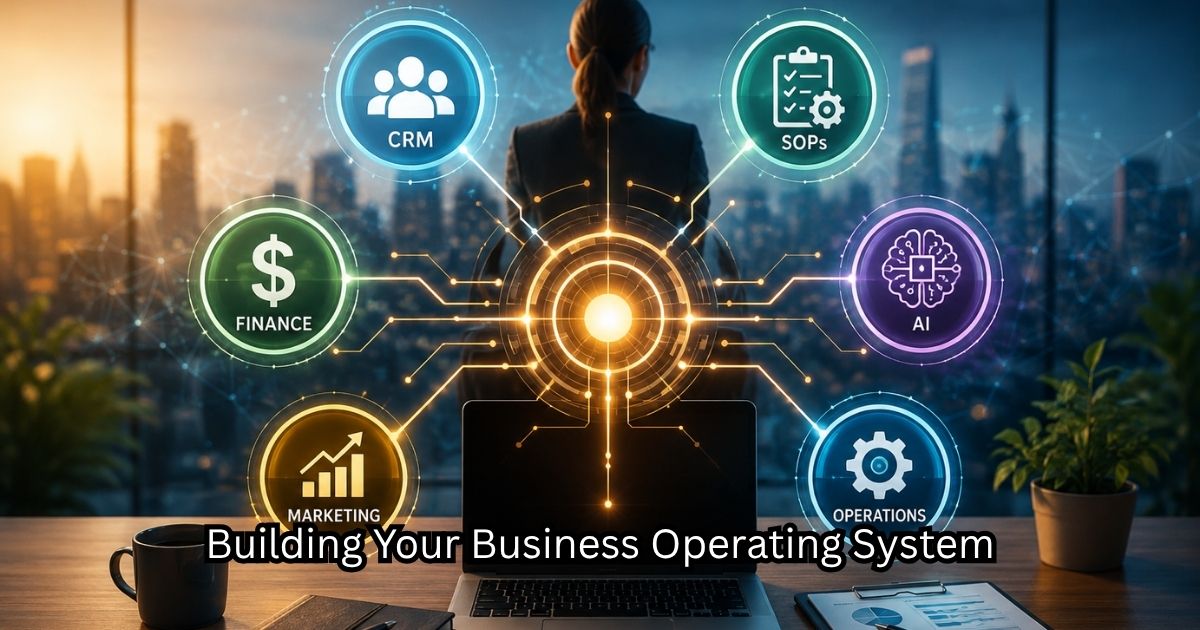
1. Standard Operating Procedures (SOPs)

Document your processes.
Every task repeated more than three times should have a documented procedure.
Benefits:
- Easier training
- Consistent quality
- Faster growth
- Increased business value
A business with documented systems is significantly easier to scale.
2. Customer Database

Many businesses focus on acquiring customers but neglect building their database.
A customer database is one of the most valuable assets a business can own.
Capture:
- Contact information
- Purchase history
- Preferences
- Communication records
This asset becomes more valuable over time.
3. Content Library

Every blog post, video, webinar, guide, and case study becomes intellectual property.
Content can:
- Generate leads
- Build authority
- Support SEO
- Be repurposed into courses and products
Content is often one of the lowest-cost assets to create.
4. Proprietary Frameworks
Turn expertise into repeatable systems.
Instead of saying:
“We provide consulting.”
Create a framework.
Examples:
- Five-step assessment process
- Growth methodology
- Customer onboarding system
- Strategic planning model
Frameworks are easier to teach, market, and eventually license.
5. Digital Products

Examples:
- Templates
- Checklists
- Calculators
- Toolkits
- Online courses
- Resource libraries
A digital product can be created once and sold thousands of times.
6. Brand Assets
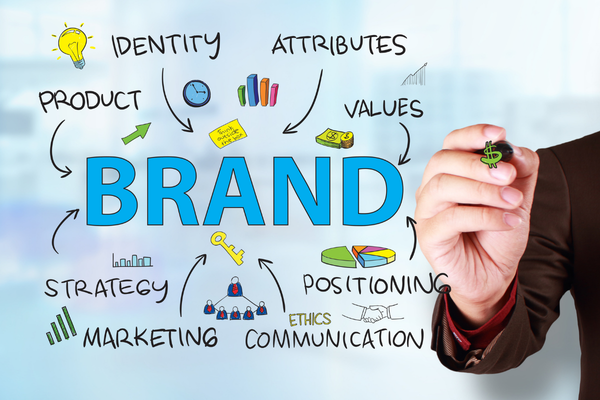
Strong brands generate trust.
Trust reduces customer acquisition costs.
Brand assets include:
- Reputation
- Design systems
- Messaging
- Trademarked names
- Unique positioning
Strong brands often become licensable assets.
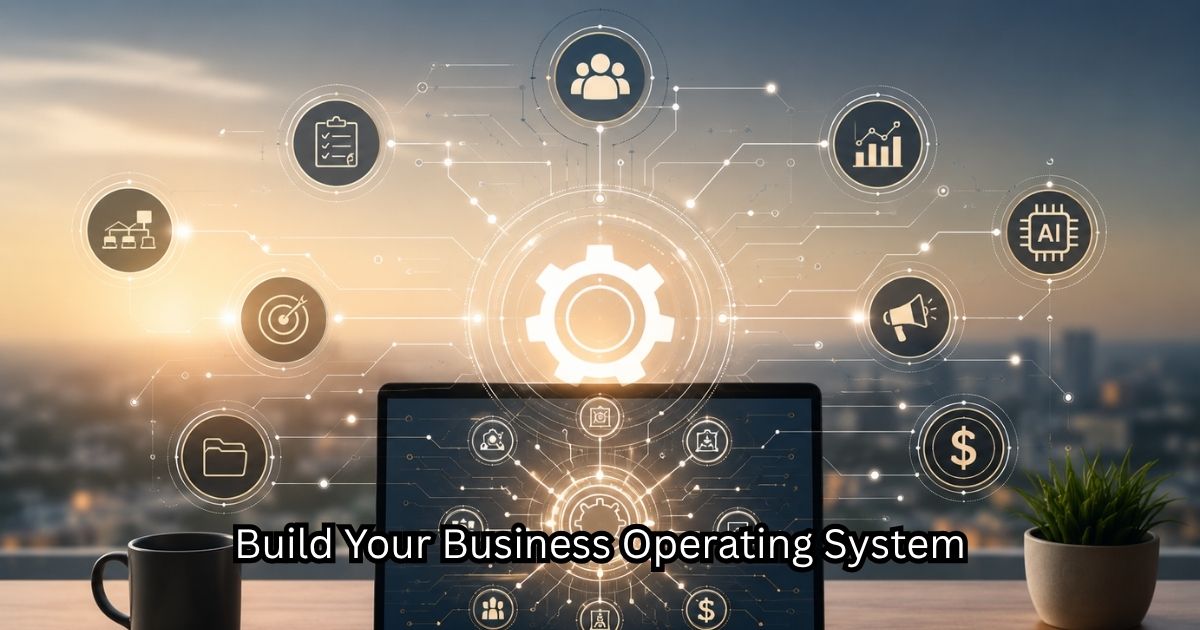
7. Software and Automation

Businesses increasingly create proprietary workflows.
With AI tools and no-code platforms, many small businesses can now build internal systems that eventually become commercial products.
The Licensing Opportunity
One of the most overlooked opportunities for small businesses is licensing.
Many owners think licensing is only for large corporations.
It is not.
A business can license:
- Training programs
- Curriculum
- Methodologies
- Software
- Content
- Brand names
- Processes
Instead of doing all the work yourself, others pay for the right to use what you have created.
This transforms expertise into an asset.
The Asset-Building Question
At the end of every month, ask:
“What asset did we create this month?”
Not:
“What work did we complete?”
But:
“What asset now exists that did not exist before?”
A new SOP?
A training guide?
A customer database?
A course?
A software tool?
A framework?
Asset-focused businesses compound their growth over time.
Final Thoughts
Many businesses spend years chasing revenue.
The most resilient businesses spend years building assets.
Revenue pays today’s bills.
Assets create tomorrow’s opportunities.
The businesses that thrive over the next decade will not simply be the ones that work harder.
They will be the ones that systematically convert knowledge, experience, and processes into assets that generate value far beyond the founder’s time.